Frequently Asked Questions

We've compiled answers to the most common questions about septic system installation and maintenance. Our 12 years of experience serving over 800 properties across Warsaw and surrounding areas helps us provide clear, practical information.

A standard residential installation typically requires 3 to 5 working days from excavation to final commissioning. The timeline depends on several factors including soil conditions, system size, and weather. For a 3000-liter concrete tank with a drainage field, expect approximately 4 days of work.

Day one involves site preparation and excavation. Days two and three cover tank installation, pipe connections, and drainage field construction. The final day includes backfilling, system testing, and site restoration. Larger systems or challenging terrain may extend this schedule by 1-2 days.

In Poland, you need a building notification submitted to the local starostwo (district office) at least 30 days before starting work. For systems under 7 cubic meters capacity serving single-family homes, full building permits are usually not required, but regulations vary by municipality.

You'll also need approval from the sanitary-epidemiological station (Sanepid) and potentially the environmental protection office. We assist with preparing all necessary documentation, including technical drawings, soil permeability tests, and distance calculations from water sources. The entire permit process typically takes 6-8 weeks.

For a household of 4 people with a properly sized 3000-liter tank, emptying is needed every 12-18 months. Smaller households may extend this to 2 years, while larger families or undersized tanks require more frequent service every 8-12 months.

Signs that emptying is overdue include slow drains, gurgling sounds in pipes, sewage odors around the tank area, or wet spots above the drainage field. Regular maintenance prevents system failures and extends the lifespan of your installation. We offer scheduled service reminders to ensure timely maintenance.

Concrete tanks are heavier (2000-4000 kg), more stable in high groundwater conditions, and last 40-50 years. They resist buoyancy forces naturally and don't require anchoring in most soil types. Installation requires heavy machinery but provides exceptional durability.

Plastic tanks weigh 80-150 kg, install faster, and cost 20-30% less initially. However, they require concrete anchoring pads in areas with high water tables and may have a shorter lifespan of 25-35 years. We recommend concrete for permanent installations and plastic for temporary solutions or difficult access sites.

Yes, winter installation is possible when ground frost doesn't exceed 40-50 cm depth, typically from late November through February in the Warsaw region. We use specialized equipment to break frozen ground and work with frost-resistant materials. However, costs increase by 15-25% due to additional labor and equipment requirements.

Optimal installation periods are April through October when soil is workable and weather is predictable. Spring installation allows the system to establish before winter, while autumn work must be completed before the first hard freeze. We monitor weather forecasts closely and adjust schedules to ensure proper installation conditions.

Calculate based on 150 liters per person per day with a minimum 3-day retention time. A family of 4 requires at least 1800 liters, but we recommend 3000 liters to accommodate guests and future needs. Homes with garbage disposals or water-intensive appliances need 20-30% larger capacity.

For a 3-bedroom house: 3000-4000 liters. For a 4-5 bedroom house: 5000-6000 liters. Commercial properties require calculations based on actual usage patterns and local regulations. We conduct on-site assessments considering household size, water consumption habits, and soil absorption rates to determine the optimal system size.

Regular maintenance includes annual inspections of tank levels, inlet/outlet baffles, and drainage field condition. Every 12-18 months, professional pumping removes accumulated solids. Bacterial additives are optional but can improve breakdown efficiency in systems with heavy use.

Avoid flushing non-biodegradable items, excessive chemicals, or grease. Use phosphate-free detergents and spread laundry loads throughout the week rather than doing multiple loads in one day. Keep detailed records of pumping dates and any repairs. We provide maintenance logs and send reminder notifications before service is due.

A complete residential installation ranges from 15,000 to 35,000 PLN depending on system type, size, and site conditions. This includes a 3000-liter concrete tank (8,000-12,000 PLN), drainage field construction (4,000-8,000 PLN), excavation work (2,000-5,000 PLN), and materials plus labor.

Additional costs may include soil testing (800-1,500 PLN), permit fees (500-1,200 PLN), and site restoration (1,000-3,000 PLN). Difficult access, rocky soil, or high water tables increase costs by 20-40%. We provide detailed written estimates after site evaluation, with no hidden fees or surprise charges.

Common warning signs include slow draining fixtures, sewage odors inside or outside the home, wet or spongy areas above the drainage field, unusually green grass over the system, and sewage backup in lower-level drains. These indicate either a full tank, clogged pipes, or drainage field failure.

Other indicators are gurgling sounds when water drains, standing water near the tank or drainage field, and contaminated well water if you have one nearby. Don't ignore these signs as they worsen quickly and lead to expensive repairs. Contact us immediately for emergency diagnostics and repair services available within 24 hours.

Never build structures over the tank or drainage field. Polish regulations require minimum 5 meters from buildings, 30 meters from wells, and 1.5 meters from property lines. The drainage field needs unrestricted access to air and cannot support vehicle traffic or permanent structures.

You can landscape with shallow-rooted plants and grass, but avoid trees within 10 meters as roots damage pipes. Driveways must be at least 3 meters from the tank and never cross the drainage field. We mark system boundaries during installation and provide site maps showing restricted areas for future reference.

Our comprehensive inspection takes 45-60 minutes and includes measuring sludge and scum levels, checking inlet/outlet baffles for damage, inspecting tank walls for cracks, testing drainage field absorption, and verifying proper ventilation. We use specialized equipment including cameras for internal tank inspection.

You receive a detailed written report with photos, current system condition rating, recommended maintenance schedule, and estimated remaining lifespan. We identify potential problems before they become emergencies and provide cost estimates for any needed repairs. Annual inspections cost 300-500 PLN and can prevent failures that cost thousands to repair.

About Fevipo

Providing reliable wastewater solutions across Warszawa and surrounding regions since 2015

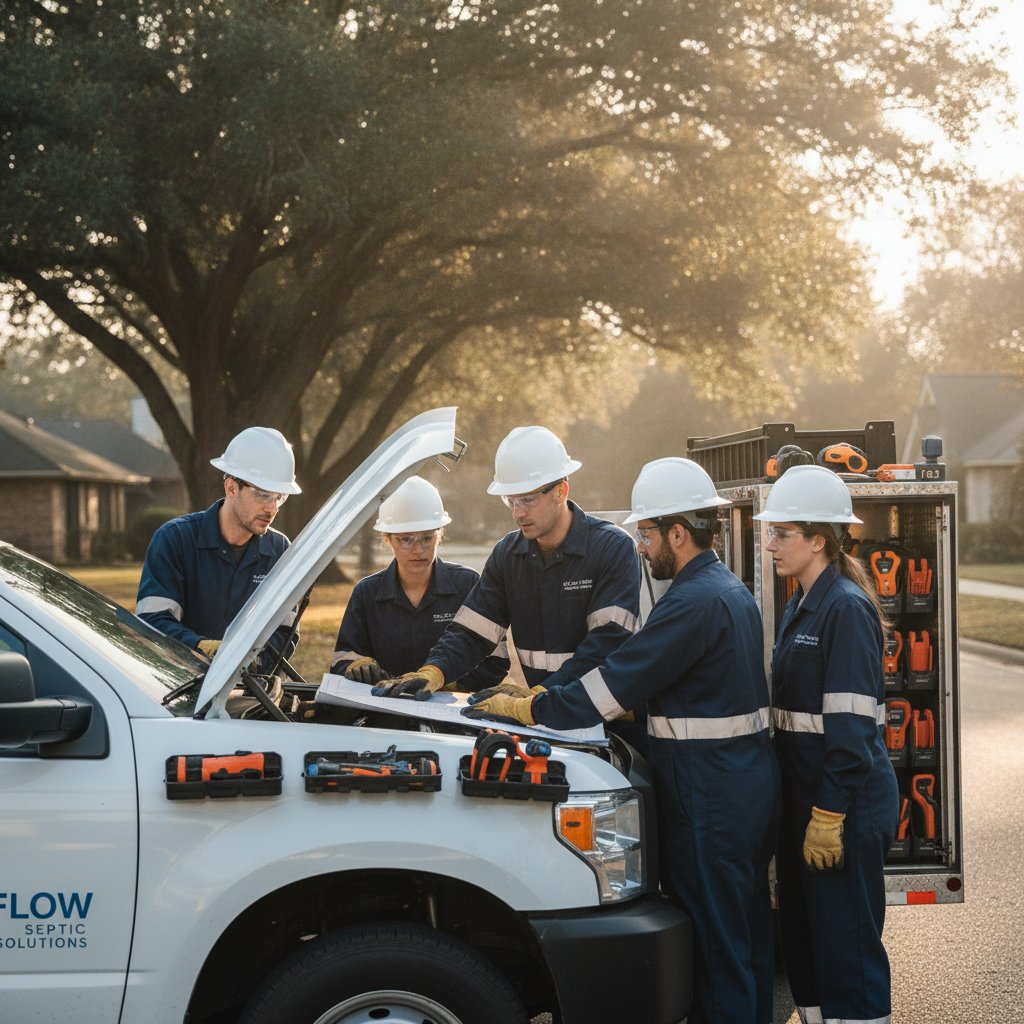
Fevipo septic installation team

Our Story

Fevipo was established in 2015 by three civil engineers who recognized a gap in the market for dependable wastewater management services in the Warszawa area. What began as a small operation with a single installation crew has grown into a company serving over 1,200 residential and commercial properties throughout Mazowieckie voivodeship.

Our founders brought together 35 years of combined experience in environmental engineering and construction. This technical foundation allowed us to approach each project with precision and attention to regulatory requirements from day one.

Today, we operate with 14 certified technicians and maintain partnerships with manufacturers of treatment systems from Germany, Sweden, and Poland. Our service area extends from central Warszawa to rural communities in Piaseczno, Pruszków, and Legionowo districts.
Our Mission

We install and maintain wastewater treatment systems that meet Polish environmental standards while remaining accessible to property owners. Each installation is designed according to soil conditions, household size, and local regulations specific to the site location.

Our Vision

To become the primary service provider for decentralized wastewater solutions in the Mazowieckie region by 2027, recognized for technical competence and transparent pricing in both residential and small business sectors.

Core Values

Technical Precision

Every installation follows manufacturer specifications and Polish construction codes. Our technicians hold current certifications in confined space work and wastewater system installation, with annual training updates on new treatment technologies.

Transparent Communication

We provide written estimates that itemize equipment costs, labor hours, and permit fees. Site assessments include soil percolation test results and system sizing calculations based on actual household water usage data.

Regulatory Compliance

All installations include documentation for municipal approval and meet requirements set by the Chief Inspectorate for Environmental Protection. We handle permit applications and coordinate inspections with local authorities in Warszawa and surrounding gminas.

Long-Term Support

Our maintenance contracts include scheduled pumping, bacterial culture replenishment, and component inspection. We maintain service records for each system and provide 24-hour emergency response within a 50-kilometer radius of our Grzybowska office.

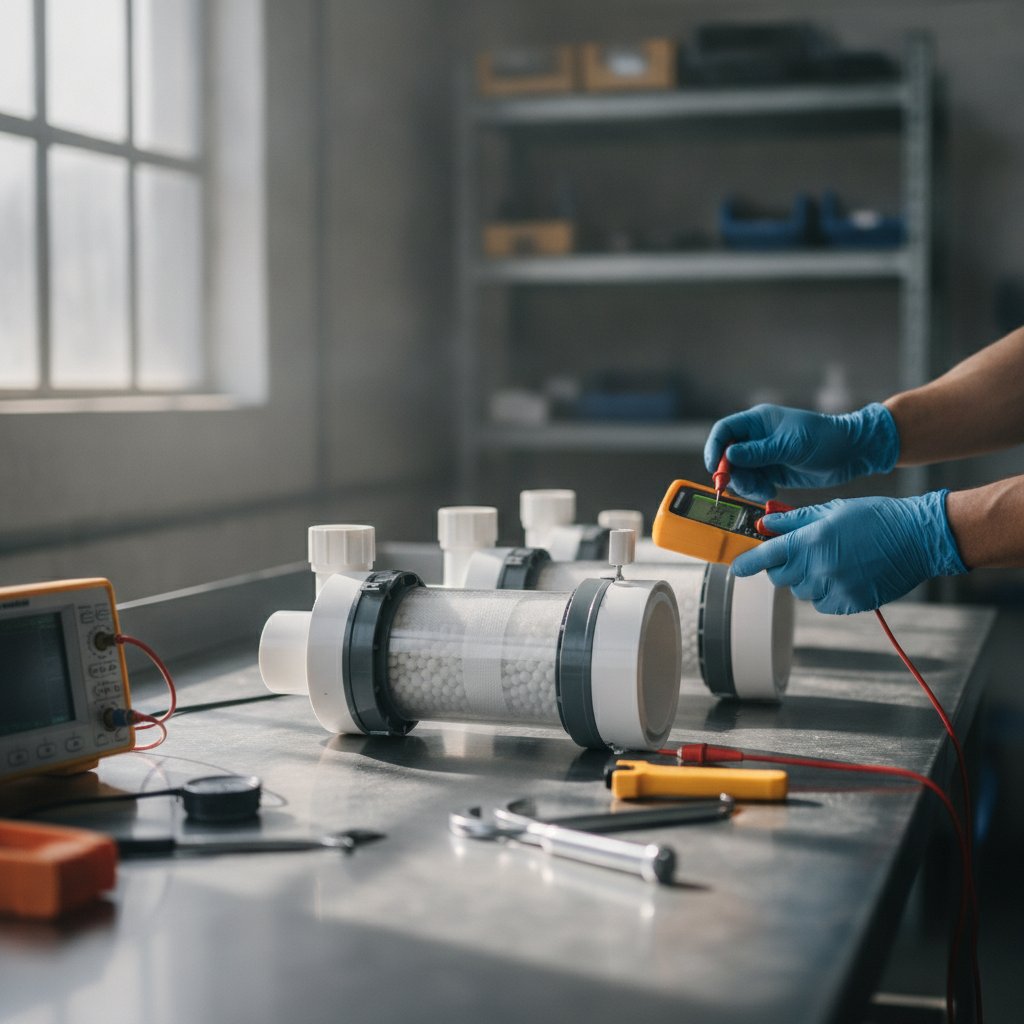
Septic system maintenance work

Experience & Expertise

Since 2015, we have completed 847 installations ranging from basic concrete tanks for single-family homes to advanced aerobic treatment units for small commercial properties. Our team has worked with 12 different system types, including gravity-fed designs for favorable terrain and pump-assisted configurations for challenging sites.

We hold contractor licenses issued by the Mazowieckie Provincial Office and maintain liability insurance coverage of 2 million PLN. Our equipment fleet includes excavators rated for depths up to 4 meters, vacuum trucks for waste removal, and diagnostic tools for system troubleshooting.